
If you’ve noticed a stubborn belly bulge that doesn’t shift no matter how much you exercise, you’re not alone. Many people—especially after pregnancy—experience a condition called diastasis recti.
The good news? You don’t always need a clinic visit to spot the early signs. With a simple at-home check, you can get a clearer idea of what’s going on with your core and take the right next steps sooner rather than later. See here: Weight Loss Injections & Saggy Skin
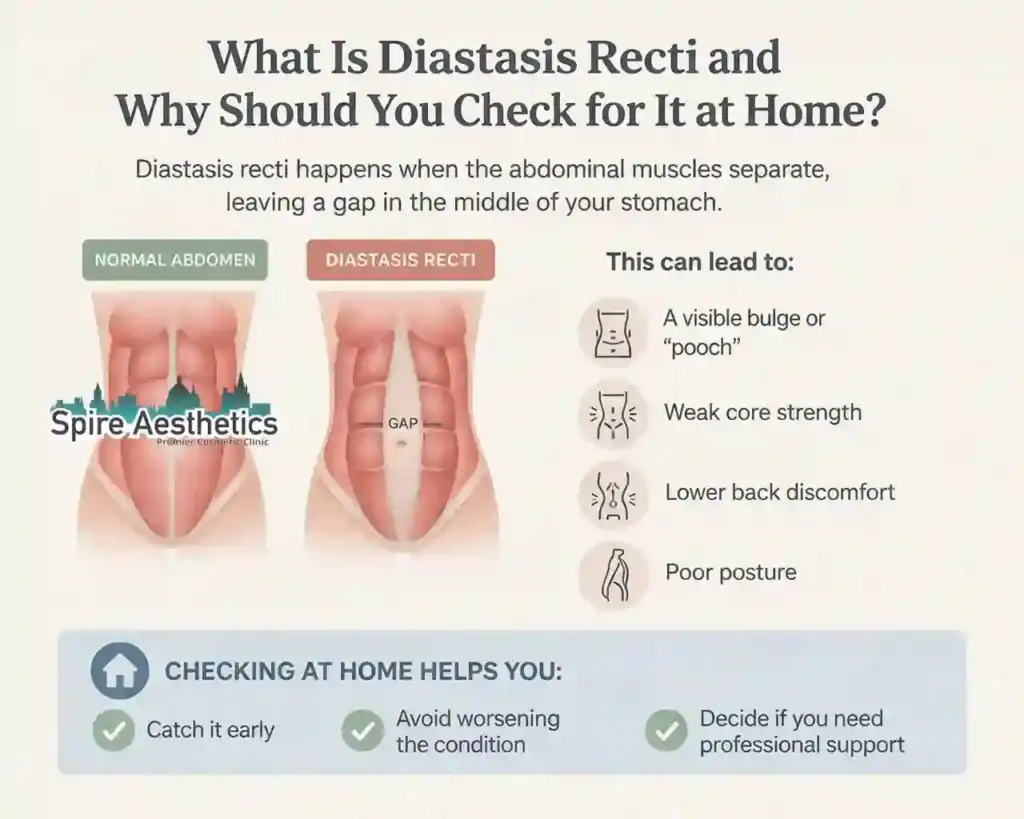
What Is Diastasis Recti and Why Should You Check for It at Home Basildon?
Diastasis recti happens when the abdominal muscles separate, leaving a gap in the middle of your stomach.
This can lead to:
- A visible bulge or “pooch”
- Weak core strength
- Lower back discomfort
- Poor posture
Checking at home Basildon helps you:
- Catch it early
- Avoid worsening the condition
- Decide if you need professional support
When Is the Right Time to Check Yourself for Diastasis Recti at Home Basildon?
Timing matters more than you might think. The best time to check is:
- 6–8 weeks after childbirth (once your body starts healing)
- When you notice a persistent belly bulge
- If your core feels unusually weak
- Before starting intense workouts
Avoid checking too soon after delivery, as your body needs time to recover naturally.
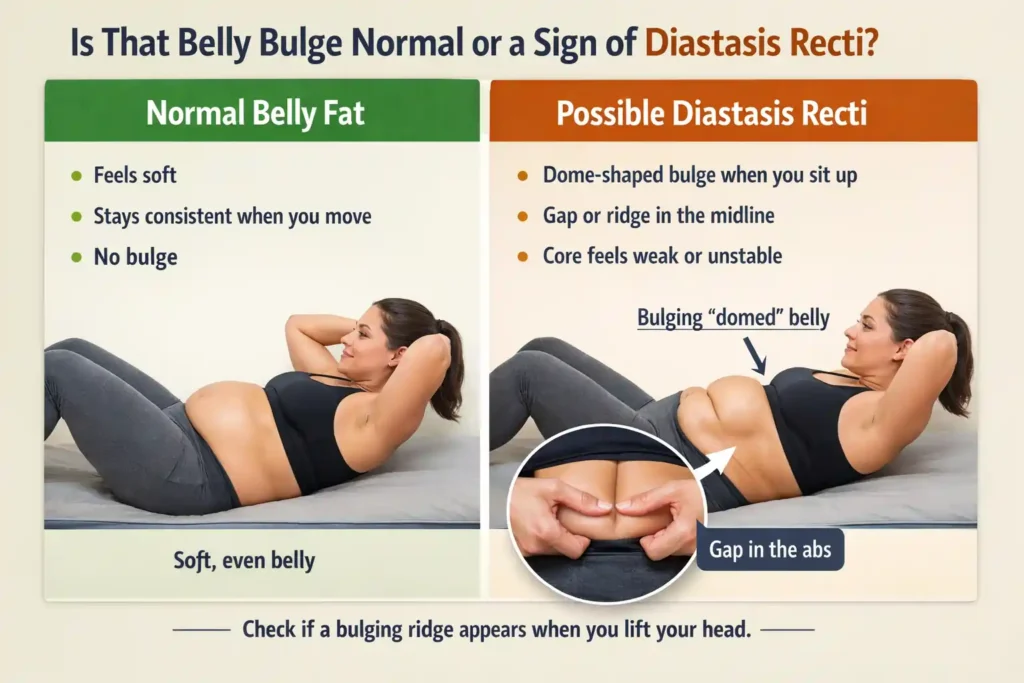
Is That Belly Bulge Normal or a Sign of Diastasis Recti?
It’s tempting to think it’s merely weight gain — but here are the signs that tell you otherwise:
Normal belly fat:
- Feels soft
- Stays consistent when you move
Possible diastasis recti:
- A dome-shaped bulge when you sit up
- Based on the trends and data, it appears that there is a gap or dip in between.
- Core feels unstable or weak
You should probably check further if the ridge appears when you lift your head.
How Can You Safely Check for Diastasis Recti at Home Step by Step?
Here’s a simple method you can try:
- Lie on your back with knees bent
- Place one hand behind your head
- Place your fingers just above your belly button
- Gently lift your head slightly (like a mini crunch)
- Press your fingers down into the midline
What to feel for:
- A gap between the muscles
- How many fingers fit into the space
- Whether the area feels firm or soft
Repeat below and above the belly button for accuracy. See Here: Regaining Confidence After Pregnancy: How to Tackle Postpartum Fat Gain
What Does a Positive Diastasis Recti Test Feel Like?
If you have diastasis recti, you might notice:
- A gap of 2 or more finger widths
- A soft or squishy feeling between muscles
- Lack of tension when pressing down
- A visible bulge when engaging your core
It’s not painful, but it can feel uncomfortable or unfamiliar.
What Should You Do If You Think You Have Diastasis Recti?
Don’t panic — this is perfectly normal and manageable.
Start with:
- When you do not do crunches or extensive core workouts
- Focusing on softer workouts to engage the core
- Improving posture and breathing techniques
If those two things don’t seem close together or are far apart, it might be time to step back from the situation and find someone with better domain-level skills.
How Can Professional Treatments Help Fix Diastasis Recti Faster?
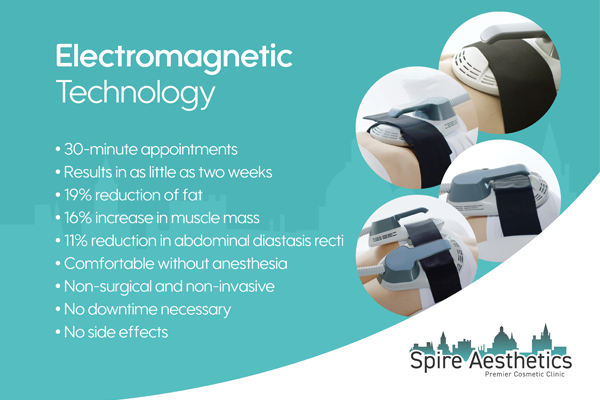
At Spire Aesthetics Basildon, advanced, non-surgical treatments are designed to strengthen and repair your core more effectively than exercise alone. See Our Diastasis Recti Treatment Basildon Price Here!
Benefits of professional treatment:
- Targets deep abdominal muscles
- Speeds up recovery time
- Improves muscle tone and strength
- Helps restore a flatter, firmer stomach
It’s a great option if you want visible results without surgery or long downtime.
How Can You Prevent Diastasis Recti from Getting Worse?
Prevention is just as crucial as treatment. Here’s what helps:
- Do not lift heavy loads without support for the core
- Skip traditional crunches and sit-ups
- Practice proper posture daily
- Use your muscles the right way as you get from place to place
- Follow safe, guided exercises
Tiny shifts in everyday behavior can go a long way to guarding your core. Check Out For Healthy Weight Loss Diets Basildon

FAQs
Q: How do I know at home whether my stomach gap is actually diastasis recti Basildon or just regular post-pregnancy fat?
It’s a common worry. The key difference is in how your stomach responds to core activation. If you notice a ridge or a bulge happening in the center of your body when you lift your head or do a tiny crunch, it’s more likely diastasis recti.” Fat stays soft and doesn’t mold over movement so readily, whereas muscle separation becomes more visible when triggered.
Q: Why does my stomach stick out more when I attempt to sit up or do core workouts?
That belly bulge happens when your abdominal muscles aren’t doing their job stabilizing your core. The pressure goes out through the gap, instead of keeping it flat. Soreness is actually a sign that some exercises could be making the problem worse, not better.
Q: How big does the gap have to be before I need to start worrying about diastasis recti?
Diastasis recti is typically defined as a separation that measures two finger-widths or wider. But it’s not just about width — the depth and tension matter, too. A shallow crevice with strong muscle underneath is better than a deep, mushy opening without support.
Q: Does diastasis recti heal on its own, or will I always need some sort of treatment to fix it?
In mild cases, you can get better on your own over time, especially if you engage in certain exercises and daily habits. But when the gap is wide or doesn’t close months after giving birth, it often takes specific care or medical treatment to heal properly.
Q: Checking for diastasis recti at home Basildon: Will I do any damage to my stomach muscles?
Yes, it’s completely safe if you’re gentle. You aren’t so much trying to push anything as you are groping for an opening. Tips: Don’t push down too hard, and don’t do full sit-ups. Simply raising the head a little activates the muscles enough for your body to understand how it should feel, but it doesn’t put undue stress on your body.
Q: What are the most common errors that people make when trying to check or treat diastasis recti at home Basildon?
Common mistakes include waiting too long to do intense core workouts, doing them too soon, relying on crunches or sit-ups, and checking incorrectly by lifting too high or pushing down too hard. The big no-no is a lack of attention to posture — misalignment can significantly extend healing time.
For Further Information, Please Call Us 03300100092